Best Trolling Motor for Bass Boats: 4 Bow-Mount Picks
On a bass boat, the trolling motor is the tool you use most of the day. It moves you quietly...
 By James
Updated November 11, 2026
On a bass boat, the trolling motor is the tool you use most of the day. It moves you quietly along banks, holds you on an offshore ledge, and keeps the boat in position while you cast. Most bass anglers run a bow-mount motor on a 24V or 36V system, steered with a foot pedal, and many now want GPS anchoring and built-in sonar in the same unit.
This guide compares four bow-mount trolling motors for bass boats from Minn Kota, Lowrance, and Garmin, from a simple cable-steer motor to fully networked GPS units. We compared thrust, voltage, shaft length, control, sonar, and warranty from what each maker publishes. For pontoons, see our trolling motor for pontoon guide.
Wiring note: 24V and 36V systems draw high current. Use the wire size and circuit breaker the maker specifies, and have an experienced installer help if you are unsure.
Our Top Picks
| Best for | Product | FH Score About FH ScoreThe FH Score is our editorial rating from 0 to 10, based on published specs, materials, warranty and value. It is not based on Amazon ratings and is never influenced by commissions. Learn more › | |
|---|---|---|---|
| Best overall |
 Minn Kota Ulterra QUEST (60 in) |
8.6/10 | Check Price |
| Best for Lowrance users |
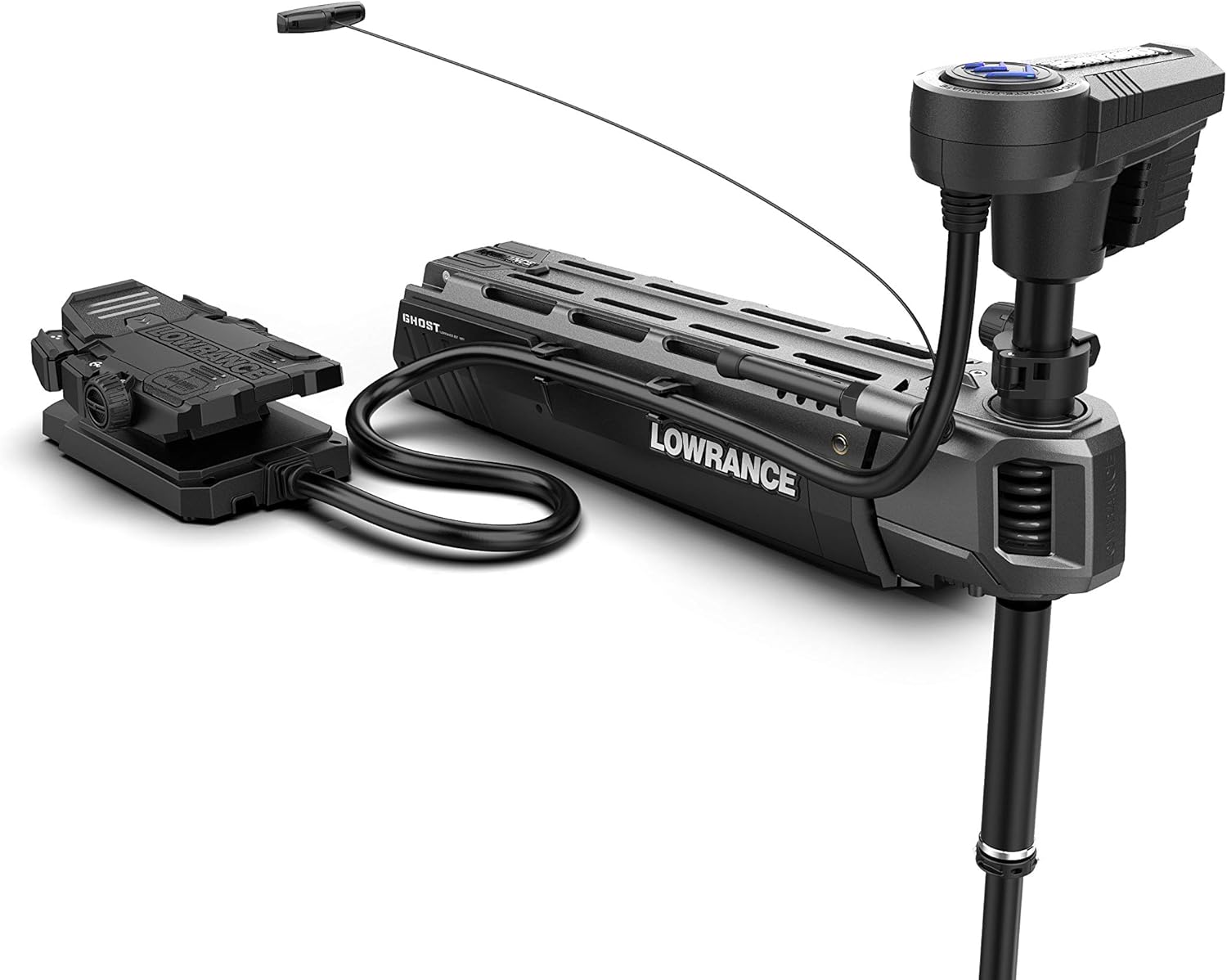 Lowrance Ghost |
8.4/10 | Check Price |
| Best for Garmin users |
 Garmin Force Pro (50 in) |
7.8/10 | Check Price |
| Best budget cable steer |
 Minn Kota Edge (70 lb, 45 in, Foot Control) |
6.4/10 | Check Price |
The Picks in Detail
Minn Kota Ulterra QUEST (60 in)
Why it made the list: The Ulterra is Minn Kota’s self-stowing bow-mount motor, and the QUEST version adds a brushless motor that runs on 24V or 36V and makes 90 or 115 lb of thrust. It includes Spot-Lock GPS anchoring, a wireless remote with an LCD screen, built-in Humminbird Dual Spectrum CHIRP sonar with the transducer wired inside the shaft, and real-time battery monitoring. The power-steering foot pedal has a programmable button for waypoints, AutoPilot, or shallow-water anchors. The 60-inch composite shaft carries Minn Kota’s lifetime shaft warranty.
Key specs: 90 lb (24V) or 115 lb (36V); brushless; 60 in composite shaft; Spot-Lock GPS; wireless remote; Dual Spectrum CHIRP sonar; Instant Response foot pedal; Intelligent Depth Control; lifetime shaft warranty.
Skip it if: your boat runs Lowrance or Garmin electronics. The Ghost or Force Pro pairs with those brands.
Pros
- Stows and deploys itself
- GPS anchor, remote, and pedal included
- Works with Humminbird electronics
Cons
- Highest cost in this guide
- Motor warranty term not stated on the listing
- Most features need a Humminbird display to get full use
Lowrance Ghost
Why it made the list: The Ghost is built around a quiet brushless motor that Lowrance says emits no electromagnetic interference, so it will not clutter your sonar screen. Lowrance rates it for 97 lb of thrust on 24V or 120 lb on 36V, and it comes in 47, 52, and 60-inch shafts. An HDI nosecone transducer is included, with Active Imaging as an upgrade. The configurable pedal has anchor and heading modes and shortcut keys. Lowrance lists a 3-year warranty and a lifetime shaft warranty.
Key specs: 97 lb (24V) or 120 lb (36V); brushless; 47, 52, or 60 in shaft (choose on the listing); HDI nosecone; configurable foot pedal; anchor and heading modes; 3-year warranty, lifetime shaft.
Skip it if: you want a self-stowing motor. The Minn Kota Ulterra QUEST deploys and stows on its own.
Pros
- Most rated thrust here at 36V
- Longest stated warranty in this guide
- Pairs with Lowrance displays
Cons
- Manual stow and deploy
- Wireless remote not listed as included on this listing
Garmin Force Pro (50 in)
Why it made the list: The Force Pro is Garmin’s brushless bow-mount motor, rated at 100 lb of thrust and run on a 24V or 36V battery bank. This version includes a GT56UHD transducer for UHD scanning sonar, both a remote and a foot pedal, and multiband GPS for anchor lock, heading hold, and following routes. It connects wirelessly to Garmin chartplotters. Garmin includes two props (high-efficiency and weedless) and a scissor-style mount with gas springs for easier deploying and stowing.
Key specs: 100 lb thrust; 24V or 36V; 50 in shaft (57 in also sold); GT56UHD transducer; remote and foot pedal included; multiband GPS; two props; scissor mount.
Skip it if: you run Humminbird electronics. The Minn Kota Ulterra QUEST is built to pair with them.
Pros
- Remote and pedal both included
- Built-in UHD scanning sonar
- Two props for open water and weeds
Cons
- Best features need a Garmin chartplotter
- Warranty terms not checked on Garmin’s page
- Premium price
Minn Kota Edge (70 lb, 45 in, Foot Control)
Why it made the list: Not every bass boat needs GPS. The Edge is a simple cable-steer bow mount with a heel and toe foot pedal, five speeds, and momentary and constant on. It has 70 lb of thrust, a 45-inch shaft, a latch and door bracket for stowing, a directional indicator on the motor head, and Minn Kota’s Weedless Wedge 2 prop for vegetation. It suits older or smaller bass boats and budget builds.
Key specs: 70 lb thrust; 45 in shaft; cable-steer foot pedal; 5 speeds; latch and door bracket; Weedless Wedge 2 prop; freshwater. Check voltage on the listing.
Skip it if: you fish offshore structure or tournaments where holding position matters. A GPS motor like the Lowrance Ghost or Ulterra QUEST saves time.
Pros
- Lowest cost here by far
- Simple, direct cable steering
- Prop built for grass
Cons
- No GPS anchor or remote
- 5 fixed speeds instead of variable
- 45 in shaft is short for rough water on some boats
Bass Boat Trolling Motors Compared
| Motor | Thrust | Voltage | Shaft | GPS anchor | Sonar | Warranty |
|---|---|---|---|---|---|---|
| Minn Kota Ulterra QUEST | 90 / 115 lb | 24V / 36V | 60 in | Yes | Dual Spectrum CHIRP | Lifetime shaft |
| Lowrance Ghost | 97 / 120 lb | 24V / 36V | 47, 52, 60 in | Anchor mode | HDI nosecone | 3 years, lifetime shaft |
| Garmin Force Pro | 100 lb | 24V or 36V | 50 in | Yes | GT56UHD | Not checked |
| Minn Kota Edge | 70 lb | Check listing | 45 in | No | None | Not stated |
How We Picked
We did not run these motors for this guide. We researched each one and compared the specifications published by the makers on their websites, manuals, and Amazon listings. Our criteria:
- Thrust and voltage for a full-size bass boat.
- Control: foot pedal, remote, and GPS anchoring.
- Sonar and electronics integration.
- Build: shaft, mount, motor type.
- Warranty and value.
Motors already in our general trolling motor guide are not repeated here. The FH Score in each product box is our editorial rating, built from five weighted criteria: performance for the job, build quality, versatility, warranty and value. It is not based on Amazon ratings. See how it works on our How We Review page.
How to Choose a Trolling Motor for a Bass Boat
Match your electronics
Modern motors pair with one brand of fish finder. Minn Kota works with Humminbird, Ghost with Lowrance, and Force with Garmin. Choosing the same brand gives you GPS control and sonar on your display. See our fish finder guide.
Voltage and batteries
Most bass boats run 24V or 36V, with two or three batteries in series. 36V gives more thrust and run time. Lithium batteries cut weight. See our lithium trolling motor battery guide.
Shaft length
Follow the maker’s chart for your boat’s bow height. The motors in this guide range from 45 to 60 inch shafts. Longer shafts keep the prop in the water in waves.
Brushless or brushed
Brushless motors are quieter and more efficient, and they cost more. Brushed motors like the Edge are simpler and cheaper.
Related Guides
- Best Trolling Motors
- Best Trolling Motor for Pontoon Boats
- Best Lithium Batteries for Trolling Motors
- Best Bass Fishing Rods
- Best Rod Holder for Bass Boat
See more in our Trolling Motors section.
FAQ
What size trolling motor do I need for a bass boat?
Most full-size bass boats use a 24V or 36V bow mount. The motors in this guide range from 70 to 120 lb of thrust.
Is 36V worth it over 24V?
For heavier boats, wind, and current, yes. It adds thrust and run time but needs a third battery or a 36V lithium pack.
What is GPS anchoring?
The motor uses GPS to hold the boat on one spot automatically. Minn Kota calls it Spot-Lock, Garmin calls it anchor lock, and Lowrance calls it anchor mode.
Cable steer or electric steer?
Cable steer gives direct feel and fewer parts. Electric steering allows remotes and GPS features.
Final Thoughts
The Minn Kota Ulterra QUEST is our top pick for a self-stowing, fully featured motor that pairs with Humminbird. Choose the Lowrance Ghost for Lowrance boats and the longest stated warranty, the Garmin Force Pro for Garmin boats, and the Minn Kota Edge for a simple, low-cost cable-steer motor.
About the author
James writes reviews and buying guides for Fishing Hacking, covering rods, reels, line, lures, and the gear anglers rely on. His work focuses on clear criteria, balanced pros and cons, and practical advice to help readers choose equipment that fits how and where they fish.