Best Battery for Kayak Fish Finder: 4 Picks Compared
Safety note: Charge lithium batteries only with a charger made for their chemistry, add an inline fuse close to the...
 By James
Updated November 14, 2026
Safety note: Charge lithium batteries only with a charger made for their chemistry, add an inline fuse close to the battery as your fish finder maker recommends, and keep the battery in a dry box or bag on a kayak. Do not submerge a battery unless the maker rates it for immersion.
A kayak fish finder needs only a small 12V battery, but the wrong one can still ruin a day: too heavy, too big for the hatch, or dead by noon. Most kayak anglers now use a small lithium (LiFePO4) battery, which weighs about half as much as a lead-acid battery of the same size and holds its voltage until it is nearly empty.
This guide compares four 12V batteries for kayak fish finders from Nocqua, CYCLENBATT, GOLDENMATE, and Mighty Max, including a complete kit and a low-cost lead-acid option. We compared capacity, size and weight, water resistance, charging, and warranty, using what each maker publishes. Still choosing a unit? See our fish finder guide.
Our Top Picks
| Best for | Product | FH Score About FH ScoreThe FH Score is our editorial rating from 0 to 10, based on published specs, materials, warranty and value. It is not based on Amazon ratings and is never influenced by commissions. Learn more › | |
|---|---|---|---|
| Best overall kit |
 Nocqua Pro Power Kit (12V 10Ah) |
7.8/10 | Check Price |
| Best SLA-size lithium |
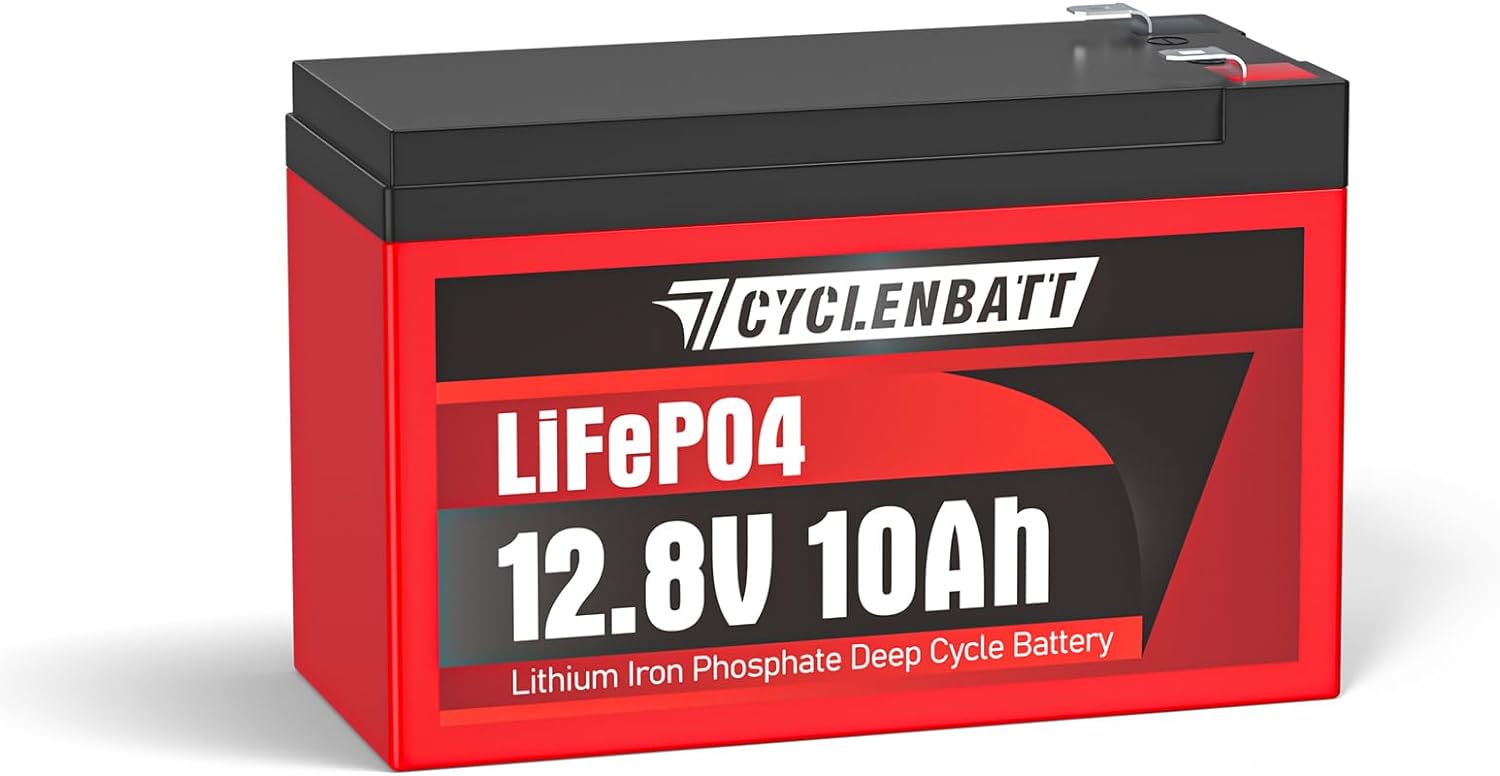 CYCLENBATT 12V 10Ah LiFePO4 Battery |
8.2/10 | Check Price |
| Best value two-pack |
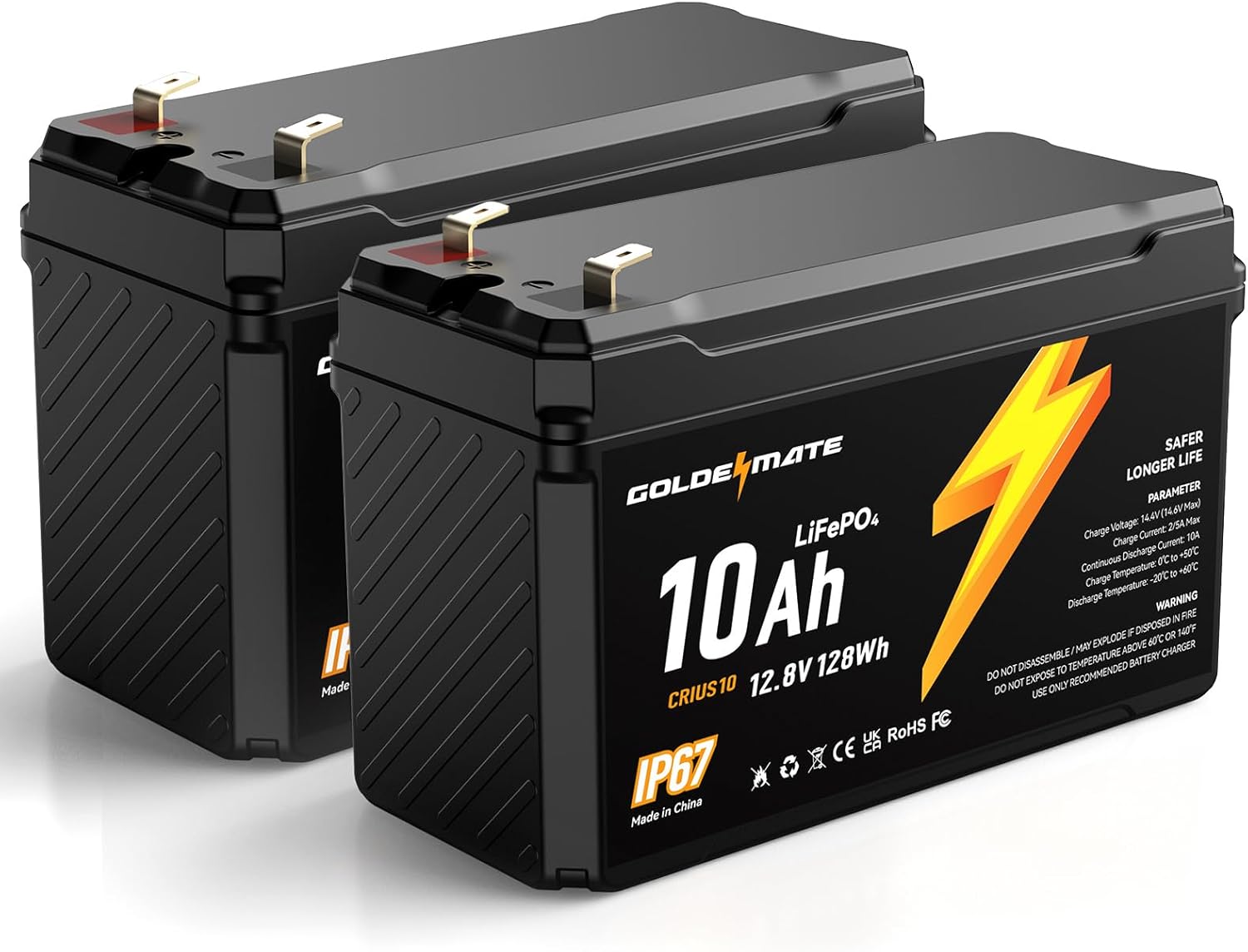 GOLDENMATE 12V 10Ah LiFePO4 (2 Pack) |
7.5/10 | Check Price |
| Best budget |
 Mighty Max ML7-12F2 12V 7Ah SLA |
6.8/10 | Check Price |
The Picks in Detail
Nocqua Pro Power Kit (12V 10Ah)
Why it made the list: Nocqua builds its kits for kayak electronics, so the battery comes with a charger and a waterproof connector that plugs into common fish finder power cables. Nocqua lists the 10Ah battery at 2.25 x 3 x 3 inches and 1.7 lb, small enough for a crate pocket, and says it is compatible with Garmin, Humminbird, Lowrance, and Raymarine units. Built-in protection guards against short circuits, overcharging, and deep discharge.
Key specs: 12V 10Ah lithium; charger included; 2.25 x 3 x 3 in; 1.7 lb; waterproof connector; about 5.5 to 6.5 hours to charge on Nocqua’s 2A charger. Nocqua describes the battery as water resistant, not waterproof. Its warranty pages differ (6 months on batteries in one place, 1 year in another).
Skip it if: you are comfortable wiring your own terminals and charger. A bare LiFePO4 battery like the CYCLENBATT costs less.
Pros
- Complete plug-and-play kit
- Very small and light
- Made for kayak electronics
Cons
- Costs more than a bare battery
- Battery itself is not waterproof
CYCLENBATT 12V 10Ah LiFePO4
Why it made the list: The CYCLENBATT is the same size as a standard 12V 7Ah lead-acid battery, so it drops into battery boxes and brackets made for SLA batteries, but it holds 10Ah and weighs 2.1 lb. It is IP67 rated, uses a 10A BMS, and comes with a 5-year warranty. The listing also says it is UL certified.
Key specs: 12V 10Ah LiFePO4; 5.95 x 2.56 x 3.7 in; 2.1 lb; IP67; 10A continuous, 20A peak for 5 seconds; 10A BMS; 5,000+ cycles; up to 4 in series or parallel; 5-year warranty. Charger sold separately.
Skip it if: you want a ready-made kit with a matching plug. The Nocqua kit is simpler.
Pros
- Fits SLA battery boxes
- IP67 water rating
- 5-year warranty
Cons
- Needs a LiFePO4 charger
- Bare terminals need a harness
GOLDENMATE 12V 10Ah LiFePO4 (2 Pack)
Why it made the list: A spare battery doubles your fishing time and lets you run a second device. This GOLDENMATE two-pack gives you two IP67-rated 12V 10Ah LiFePO4 batteries at about 3.3 lb each, with a built-in BMS and support for series or parallel wiring. GOLDENMATE lists a maximum charge current of 5A.
Key specs: Two 12V 10Ah LiFePO4 batteries; IP67; 3.3 lb each; built-in BMS; 5,000+ cycles; series or parallel; 5A max charge current; LiFePO4 charger required.
Skip it if: you only need one battery. A single CYCLENBATT is lighter and has a clear warranty.
Pros
- Two batteries for the price of one kit
- IP67 water rating
- Spare for long days or ice fishing
Cons
- Heavier than the CYCLENBATT
- Warranty not stated on the listing
Mighty Max ML7-12F2 (12V 7Ah SLA)
Why it made the list: If you fish a few times a year, a sealed lead-acid AGM battery still works and costs the least. The Mighty Max ML7-12F2 is a spill-proof 12V 7Ah battery that mounts in any position and resists vibration, with F2 terminals and a 1-year warranty. It is the size many fish finder battery boxes are made for.
Key specs: 12V 7Ah SLA AGM; 5.88 x 2.50 x 3.88 in; F2 terminals; mounts in any position; battery only, no harness; 1-year warranty.
Skip it if: you fish often or care about weight. A lithium battery lasts far more cycles.
Pros
- Lowest cost
- Works with standard lead-acid chargers
- Spill-proof
Cons
- Heavier than lithium for less capacity
- Voltage drops as it drains
Kayak Fish Finder Batteries Compared
| Battery | Chemistry | Capacity | Weight | Water rating | Charger | Warranty |
|---|---|---|---|---|---|---|
| Nocqua Pro Power Kit | Lithium | 10Ah | 1.7 lb | Water resistant | Included | 6 months to 1 year |
| CYCLENBATT | LiFePO4 | 10Ah | 2.1 lb | IP67 | Separate | 5 years |
| GOLDENMATE (2 pack) | LiFePO4 | 10Ah each | 3.3 lb each | IP67 | Separate | Not stated |
| Mighty Max ML7-12F2 | SLA AGM | 7Ah | Not stated | Sealed | Separate | 1 year |
How We Picked
We did not use these batteries for this guide. We researched each one and compared the specifications published by the makers on their websites and Amazon listings. Our criteria:
- Capacity for a full day of sonar.
- Size and weight for kayak storage.
- Water resistance and protection circuits.
- Charging and included accessories.
- Warranty and value.
The FH Score in each product box is our editorial rating, built from five weighted criteria: performance for the job, build quality, versatility, warranty and value. It is not based on Amazon ratings. See how it works on our How We Review page.
How to Choose a Kayak Fish Finder Battery
Estimate runtime
Check your fish finder’s current draw in its manual. Nocqua suggests a simple estimate: battery amp hours x 0.85, divided by the draw in amps. For example, a unit drawing 0.5 A on a 10Ah battery gives about 17 hours. Bright screens, side imaging, and cold weather shorten that.
Lithium or lead-acid
LiFePO4 batteries are lighter, last thousands of cycles, and keep steady voltage. SLA batteries cost less up front but weigh more and wear out sooner.
Use the right charger
Lithium batteries need a LiFePO4 charger. A lead-acid charger may not fully charge them or may damage them.
Protect it from water
Even IP67 batteries do best in a dry box. Use a waterproof connector, add an inline fuse, and rinse and dry connectors after saltwater trips.
Related Guides
- Best Fish Finders
- Best Fish Finders for Jon Boats
- Best Fishing Kayaks
- Best Lithium Batteries for Trolling Motors
- Best Kayak Fish Finder
- Best 16V Lithium Battery for LiveScope
See more in our Marine Batteries section.
FAQ
What size battery do I need for a kayak fish finder?
Most kayak anglers use a 12V battery of 7 to 12Ah. That runs a typical small fish finder for a full day.
Can I use a lithium battery with any fish finder?
Most 12V fish finders work with 12V LiFePO4 batteries. Check your unit’s voltage range in its manual.
Where should I put the battery on a kayak?
Keep it in a dry box near the center of the kayak, secured so it cannot slide, with a fuse close to the battery.
Final Thoughts
The Nocqua Pro Power Kit is our top pick for a small, complete kit that plugs straight into most fish finders. Choose the CYCLENBATT for an IP67 lithium battery that fits SLA battery boxes with a 5-year warranty, the GOLDENMATE two-pack for a spare at low cost, and the Mighty Max SLA if you fish rarely and want the lowest price.
About the author
James writes reviews and buying guides for Fishing Hacking, covering rods, reels, line, lures, and the gear anglers rely on. His work focuses on clear criteria, balanced pros and cons, and practical advice to help readers choose equipment that fits how and where they fish.