Best Saltwater Trolling Motor: 4 Picks for Bays, Flats and Skiffs
Salt water destroys electric motors that are not built for it. A saltwater trolling motor uses sealed electronics, corrosion-resistant coatings,...
 By James
Updated November 11, 2026
Salt water destroys electric motors that are not built for it. A saltwater trolling motor uses sealed electronics, corrosion-resistant coatings, and sacrificial or stainless hardware so it can sit in brackish bays and ocean spray season after season. On a bay boat or skiff, a saltwater bow-mount with GPS anchoring also lets you hold on a flat, a dock line, or a wreck without dropping an anchor.
Many states require you to register a boat that uses any motor, including an electric trolling motor. Check your state’s boating agency before you launch. Install the circuit breaker or fuse the motor maker recommends, keep battery terminals covered, rinse the motor with fresh water after each trip, and wear a life jacket on the water.
This guide compares four saltwater trolling motors: two Minn Kota Riptide bow-mounts, a Garmin Force Kraken, and a Newport transom motor for small skiffs and jon boats. We compared thrust, shaft length, positioning features, voltage, and corrosion protection from what each maker publishes. For freshwater options, see our trolling motors guide.
Our Top Picks
| Best for | Product | FH Score About FH ScoreThe FH Score is our editorial rating from 0 to 10, based on published specs, materials, warranty and value. It is not based on Amazon ratings and is never influenced by commissions. Learn more › | |
|---|---|---|---|
| Best overall |
 Minn Kota Riptide Terrova 55 lb 54 in |
7.9/10 | Check Price |
| Best for bigger boats |
 Minn Kota Riptide PowerDrive 70 lb 54 in |
7.6/10 | Check Price |
| Best premium |
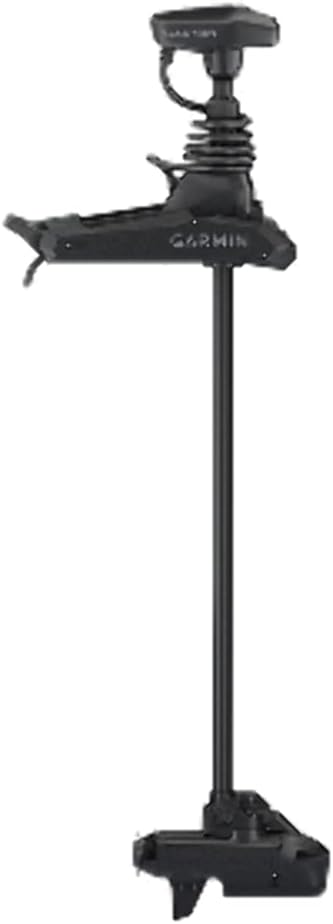 Garmin Force Kraken 63 in |
7.8/10 | Check Price |
| Best budget transom |
 Newport L-Series 62 lb Saltwater |
7.3/10 | Check Price |
The Picks in Detail
Minn Kota Riptide Terrova 55 lb
Why it made the list: The Riptide Terrova is Minn Kota’s saltwater version of its popular Terrova bow-mount. Its lower unit housings are grit-blasted, coated in aluminum, and powder coated to resist salt corrosion. GPS Spot-Lock holds you in place, Jog moves that spot 5 feet at a time, and drift, follow, and dodge modes help on tidal water. A wireless LCD remote controls it all, and a one-touch lever deploys and stows the motor. This model has 55 lb of thrust on a 12V system and a 54-inch shaft.
Key specs: 55 lb thrust; 12V; 54-inch shaft; bow mount; GPS Spot-Lock and Jog; drift, follow, and dodge modes; wireless LCD remote; Digital Maximizer; saltwater corrosion protection.
Skip it if: you run a larger, heavier boat or fish strong tides. Step up to the 70 lb Riptide PowerDrive or the Kraken.
Pros
- GPS anchoring built for tidal water
- Proven saltwater corrosion protection
- Easy one-touch deploy and stow
Cons
- 55 lb may be light for heavy bay boats in strong current
- Costs far more than a manual motor
Minn Kota Riptide PowerDrive 70 lb
Why it made the list: The Riptide PowerDrive brings 70 lb of thrust on a 24V system, with GPS Spot-Lock and a wireless LCD remote, at a lower cost than the Terrova. It has the same grit-blasted, aluminum-coated, powder-coated lower unit, a deploy-assist lever, and a built-in battery meter. The extra thrust helps heavier skiffs and bay boats hold position in wind and current.
Key specs: 70 lb thrust; 24V; 54-inch shaft; bow mount; GPS Spot-Lock; wireless LCD remote; deploy-assist lever; battery meter; saltwater corrosion protection.
Skip it if: you want drift and follow modes. The Riptide Terrova has more features.
Pros
- More thrust for heavier boats
- GPS anchoring at a lower cost
- Saltwater-rated lower unit
Cons
- Fewer navigation modes than the Terrova
- Needs two 12V batteries or one 24V battery
Garmin Force Kraken 63 in
Why it made the list: Garmin says the Force Kraken is its most powerful trolling motor, at 100 lb of thrust from a brushless motor that runs on 24 or 36 volts and is tuned for rough open water. Anchor lock uses multi-band GPS plus a heading sensor (AHRS) for precise holding, and the motor links wirelessly to Garmin chartplotters to follow routes and patterns. It uses a composite shaft and a pivot-style mount for tight bows, and this version includes a GT56 UHD transducer.
Key specs: 100 lb thrust; 24V or 36V; 63-inch shaft; brushless; multi-band GPS anchor lock with AHRS; chartplotter integration; pivot mount; composite shaft; GT56 UHD transducer included.
Skip it if: you run Humminbird or Lowrance electronics or a small skiff. A Riptide makes more sense.
Pros
- Most thrust here, for big boats and rough water
- Precise anchor lock
- Tight integration with Garmin electronics
- Long shaft for high bows
Cons
- Highest cost by far
- Best value only if you run Garmin electronics
Newport L-Series 62 lb
Why it made the list: For jon boats, small skiffs, and canoes on salt water, a simple transom motor does the job. Newport rates the L-Series for fresh and salt water, using stainless steel, magnesium, and zinc hardware. This 62 lb model runs on one 12V battery (Newport suggests 50Ah), has a 40-inch shaft, 5 forward and 3 reverse speeds, a 6-inch telescoping tiller, a 10-LED battery meter, and an included 60A circuit breaker. It carries a 2-year warranty.
Key specs: 62 lb thrust; 12V; 40-inch shaft; transom mount; 8 speeds (5 forward, 3 reverse); max 58A draw; 60A breaker included; 2-year warranty.
Skip it if: you fish from the bow and want hands-free control. Choose a Riptide bow-mount.
Pros
- Low cost for a saltwater-rated motor
- Breaker included
- Simple, with little to fail
Cons
- No GPS anchoring or remote
- Hand tiller only, from the stern
Saltwater Trolling Motors Compared
| Motor | Thrust | Voltage | Shaft | Mount | GPS anchor |
|---|---|---|---|---|---|
| Minn Kota Riptide Terrova | 55 lb | 12V | 54 in | Bow | Yes |
| Minn Kota Riptide PowerDrive | 70 lb | 24V | 54 in | Bow | Yes |
| Garmin Force Kraken | 100 lb | 24V or 36V | 63 in | Bow, pivot | Yes |
| Newport L-Series | 62 lb | 12V | 40 in | Transom | No |
How We Picked
We did not run these motors on a boat for this guide. We researched each one and compared what the makers publish on their listings. Our criteria:
- Built for salt water: corrosion protection and saltwater rating.
- Thrust and shaft length for common saltwater boats.
- Positioning: GPS anchoring and remote control.
- Power system and battery needs.
- Warranty and value.
The FH Score in each product box is our editorial rating, built from five weighted criteria: performance for the job, build quality, versatility, warranty and value. It is not based on Amazon ratings. See how it works on our How We Review page.
How to Choose a Saltwater Trolling Motor
Never use a freshwater motor in salt
Freshwater motors lack the sealing and coatings to handle salt, and makers usually do not cover salt damage on them. Buy a motor labeled for salt water.
Thrust
Heavier boats need more thrust, and wind and tidal current add to the load. Check the motor maker’s boat size guidance, and lean toward more thrust for salt water than you would use on a calm lake.
Shaft length
Bay boats and center consoles have higher bows than bass boats, and waves lift the bow. Choose a shaft long enough to keep the prop under water in chop; many saltwater bow-mounts run 54 to 63 inches or more.
Voltage and batteries
Match batteries to the motor: 12V, 24V, or 36V. See our 24 volt lithium battery and 36V lithium battery guides.
Care
Rinse the motor, mount, and connections with fresh water after each trip, keep battery terminals clean, and check the prop for line wrapped around the shaft.
Related Guides
- Best Trolling Motors
- Best Transom Mount Trolling Motor
- Best Trolling Motor for Pontoon
- Best 24 Volt Lithium Battery for Trolling Motor
See more in our Trolling Motors section.
FAQ
Can I use a freshwater trolling motor in salt water?
It is not recommended. Salt corrodes parts that are not protected, and the warranty may not cover it.
What thrust do I need for a bay boat?
Many bay boats use 70 lb or more on 24V or 36V systems, especially in current. Small skiffs can get by with 55 lb.
Is GPS anchoring worth it in salt water?
For flats, docks, and structure fishing in current and wind, many anglers find it saves time compared with a manual anchor.
How do I care for a saltwater trolling motor?
Rinse with fresh water after use, keep connections clean and dry, and inspect the prop and shaft regularly.
Final Thoughts
The Minn Kota Riptide Terrova is our top pick for a saltwater bow-mount with GPS anchoring and navigation modes. Choose the Riptide PowerDrive 70 lb for more thrust at a lower cost, the Garmin Force Kraken for big boats with Garmin electronics, and the Newport L-Series for a simple, low-cost transom motor.
About the author
James writes reviews and buying guides for Fishing Hacking, covering rods, reels, line, lures, and the gear anglers rely on. His work focuses on clear criteria, balanced pros and cons, and practical advice to help readers choose equipment that fits how and where they fish.